




X-rays are one of today's most common dental diagnostic tools. The process uses ionizing radiation that can damage your cells and significantly reduce your state of health. Diagnocam offers you a new alternative to X-rays, and a new alternative to radiation for better patient care.
What is a dental X-ray?
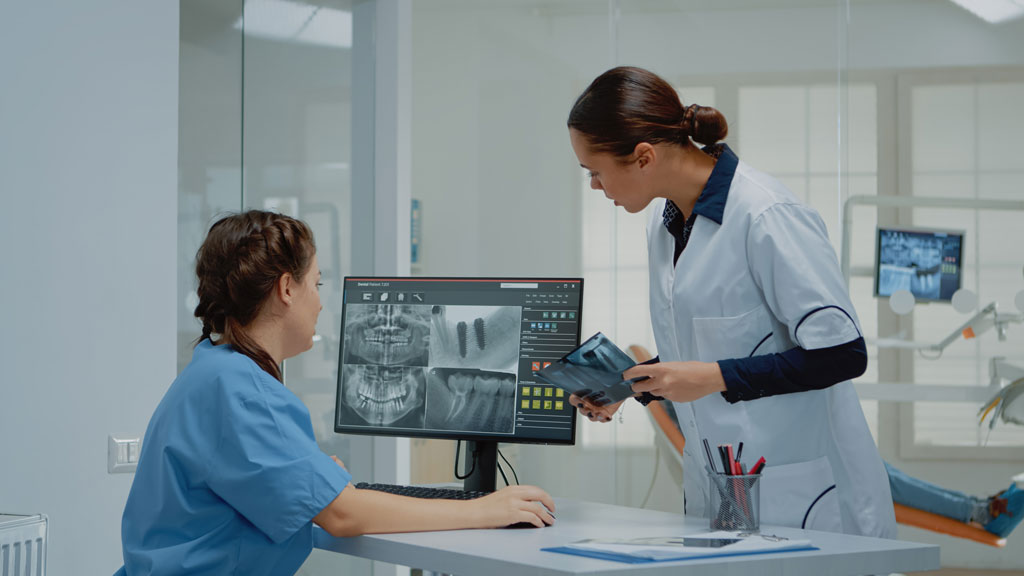
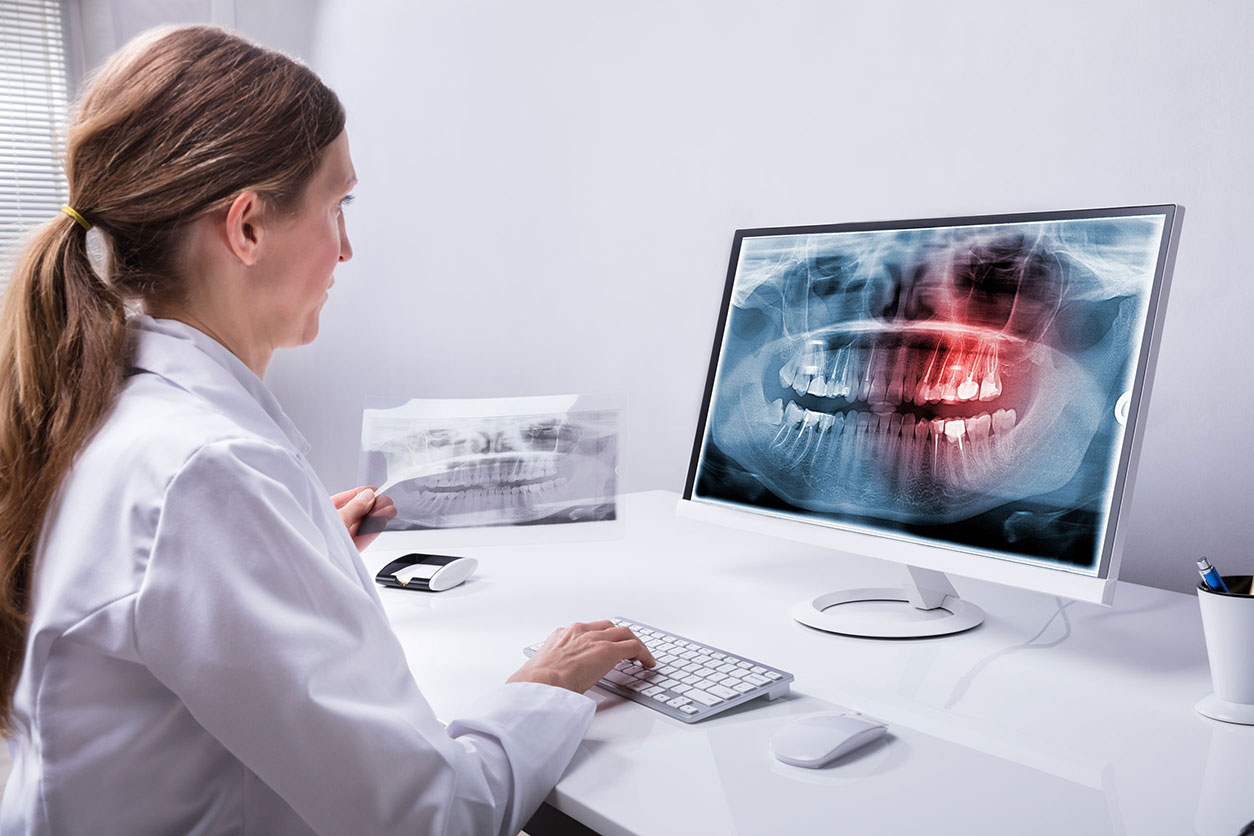
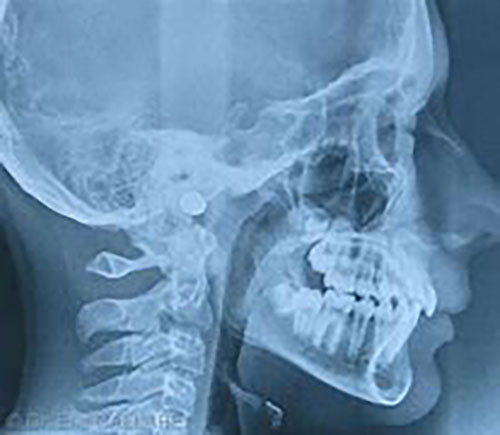
A dental X-ray is a radiological examination used to diagnose dental and bone pathologies.
This is a medical imaging technique that enables us to visualize the teeth, maxillae, sinuses, temporomandibular joints and jaw.
Dental X-rays are taken by dentists, radiologists or radiology technicians. They use x-rays, which are ionizing radiation.
Radiation doses are very low, and radiation protection is ensured by the operator.
There are several types of dental X-ray examination. These include dental panoramic radiography, cone or cone-beam radiography, computed tomography, dental scanner and ultrasound. Each imaging technique has its own advantages and limitations, depending on the pathologies to be diagnosed.
When should I have my teeth x-rayed?
Il y a plusieurs raisons pour lesquelles votre dentiste peut recommander une radiographie dentaire. Tout d’abord, elle permet de détecter les caries dentaires qui ne sont pas encore visibles à l’œil nu. Les radiographies peuvent également aider à diagnostiquer des abcès dentaires ou des kystes dans les os de la mâchoire.
Si vous avez des douleurs dentaires, une radiographie peut aider à localiser la cause de la douleur. Elle peut révéler une inflammation de la pulpe dentaire, une fracture dentaire ou une infection.
Les radiographies dentaires sont également importantes pour évaluer le développement de la dentition chez les enfants et les adolescents. Elles sont utilisées pour vérifier si les dents de sagesse ont poussé correctement ou si les dents permanentes ont éclaté correctement. Les radiographies dentaires sont également utilisées pour évaluer les implants dentaires ou les prothèses dentaires.
Elles aident les chirurgiens-dentistes à planifier la pose d’un implant dentaire ou d’une prothèse dentaire en prenant en compte la structure osseuse environnante.
Dental X-rays are also very important for general oral health monitoring.
Dental X-rays are recommended every 1 to 3 years, depending on your dental health and how often you go to the dentist.
What are the dangers and risks of dental X-rays?
In fact, there is a risk of radiation exposure when you have an X-ray at the dentist. The risk is very small, but it does exist.
Radiation exposure can cause damage to the body if not used correctly. The effects of this damage may not become apparent until many years after exposure.
There is also a risk of developing cancer from radiation exposure over time if you have several x-rays a year, or if you have frequent x-rays throughout your life. The risk of developing cancer from dental X-rays is very low compared to other types of cancer risk, such as smoking or excessive sun exposure.
In fact, it is recommended to limit radiation exposure as much as possible by only having the necessary dental X-rays every two or three years, rather than every year as is currently the case for some patients.

Diagnocam is an alternative to traditional dental X-rays.
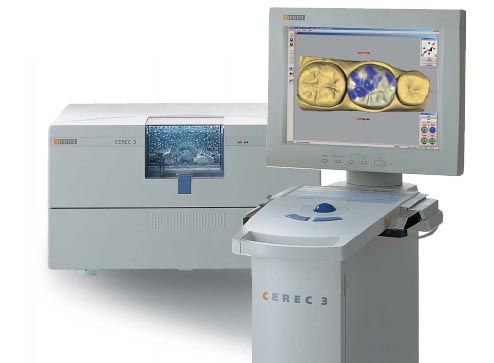
Diagnocam is an alternative to traditional dental X-rays. Diagnocam uses a 3D imaging technology known as Volumetric Coronal Scanning (VCS).
It uses a camera that takes thousands of photos in a matter of seconds, providing more accurate results than traditional X-rays.
The device provides a detailed view of the teeth and jaw, which can help dentists diagnose conditions such as cavities, gum disease or oral cancer.
Concrètement, le Diagnocam est une nouvelle façon de voir ce qui se passe dans votre bouche. Et comme cette technologie utilise la tomodensitométrie plutôt que des appareils à rayons X, il n’y a aucun risque d’exposition aux radiations.
Ce processus est totalement indolore, il convient donc aux enfants, aux femmes enceintes, à tout le monde.
Au Centre Dentaire Lancy, Champel et Chêne-Bourg, nous utilisons d’ores et déjà le dispositif Diagnocam pour nos patients.
Discover also the Centre Dentaire Chêne-Bourg and the Centre Dentaire Champel